Accession 003: The Wettest Block in the World
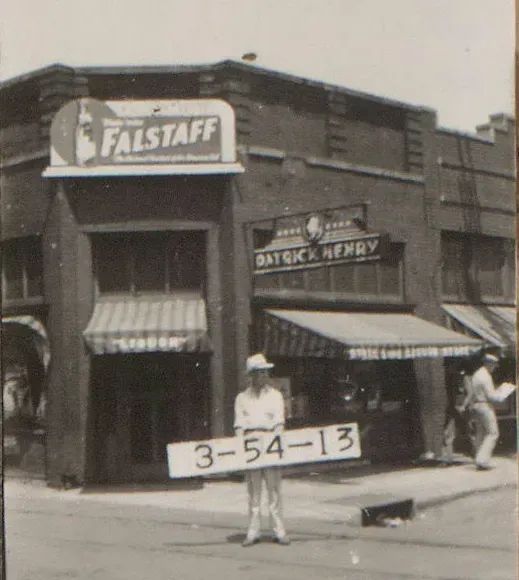
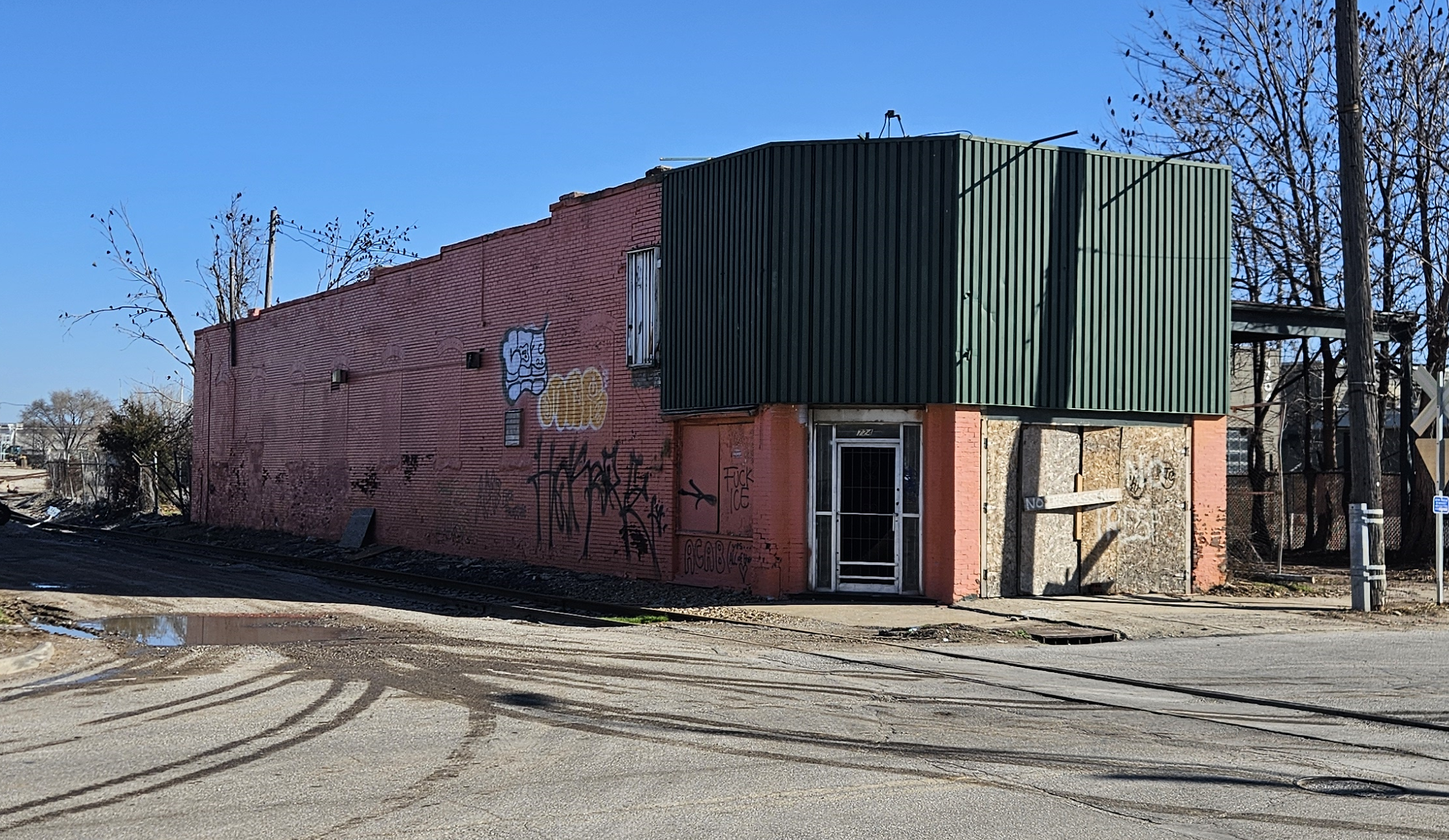
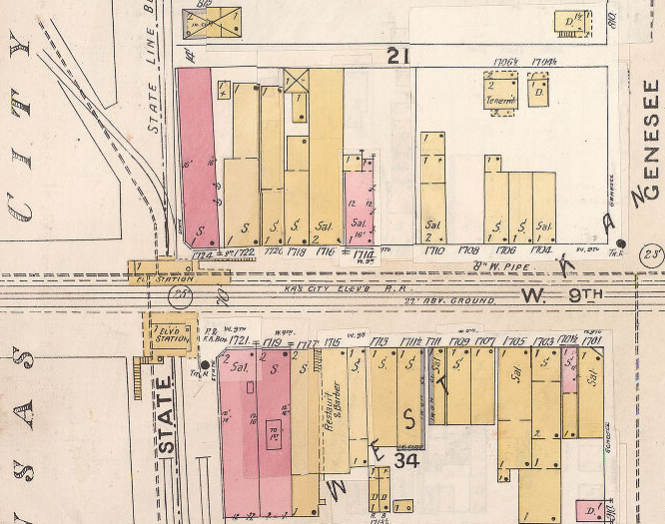
Over a hundred years ago, the building next door to my practice was a saloon, sitting directly next to the state line between Kansas (a dry state) and Missouri. 9th Street was famous as ‘The Wettest Block in the World’, with 24 saloons side by side at the intersection of the state line and the stockyards district that was the beating heart of the West Bottoms. The whole street was one of the busiest, most brazen neighborhoods in the city. Some of the original buildings are gone, some have been repurposed, some have been replaced. Here is the building today.
The West Bottoms is a district of Kansas City directly west of downtown, reaching to the Kansas state border, and situated just south of the confluence of the Missouri River and the Kansas River. At the turn of the 20th century it was a major industrial nexus, being accessible to river freight and railroad lines. The largest driver of business was the stockyard district, a contender for the largest livestock auction platform in the US, if not the world.
Being the permeable legal boundary during the Temperance movement and sitting next to the economic center of blue collar work in Kansas City led to the development of my neighborhood as the nexus of inebriation. The Kansas City Times labeled the area as “The Wettest Block in the World” in 1907, and eventually tourists were asking about the area by that name.
In 1951, the Kaw / Kansas River flooded. Now remembered as the Great Flood of 1951, it was a terrifying flood throughout much of the central plains of the US. In many places, the peak of the high water mark was too high for flood gauges to measure. For an area like the West Bottoms, sitting adjacent to two rivers, it was a devastating surge that washed away entire buildings, drowning the area and ruining its fortune for decades.
My day to day practice is pet aquamation, a process which uses water to return the physical components of the deceased to the earth, leaving only the inorganic remains to return to the family. Choosing this building for my business was happenstance, independent of the history of the district, but one must appreciate the serendipity of thematic overlap. There is an eeriness to the many faces of water here. Water has been the bringer of prosperity in the form of river boat cargo. It has been the bringer of joy as the ‘water of life’, the literal meaning of the Gaelic ‘uisge beathe’ from which whiskey derives its name. During the flood, it was the bringer of destruction, a presence which submerged and replaced the entire West Bottoms. Today, it is harnessed as a process of peace and resolution. This area has been ‘the wettest’ in more senses of the word than were ever intended by that description.
Death is often viewed as a finite point or a clean transition, a before and after. We need this separation to process the transition and rebuild the network of our lives without the departed. But death is often prolonged and extended, not necessarily in the act of literal cessation of function like a heartbeat slowing, but in the anticipatory grief beforehand, and the persistence of the body afterwards. When a person dies, they are still with us in the most literal of senses; their body is a part of our world, and it commands our care and attention. The precise duration or moment of expiry is secondary to the new situation where we must tend to the remains.
We accord a minimum grace to the dead. They can no longer advocate for themselves, and as such we guarantee a uniform dignity of station. The situation of the dying, however, is much less predictable. A person can die defiantly, or calmly acquiesce; they can die suddenly, or wither over months. Their status among the living is the result of the connections and obligations built over the course of their life, and most people work to maintain whatever degree of control over their own autonomy possible as their faculties decline. They set their own trajectory, and hope that those around them will see it through to completion.
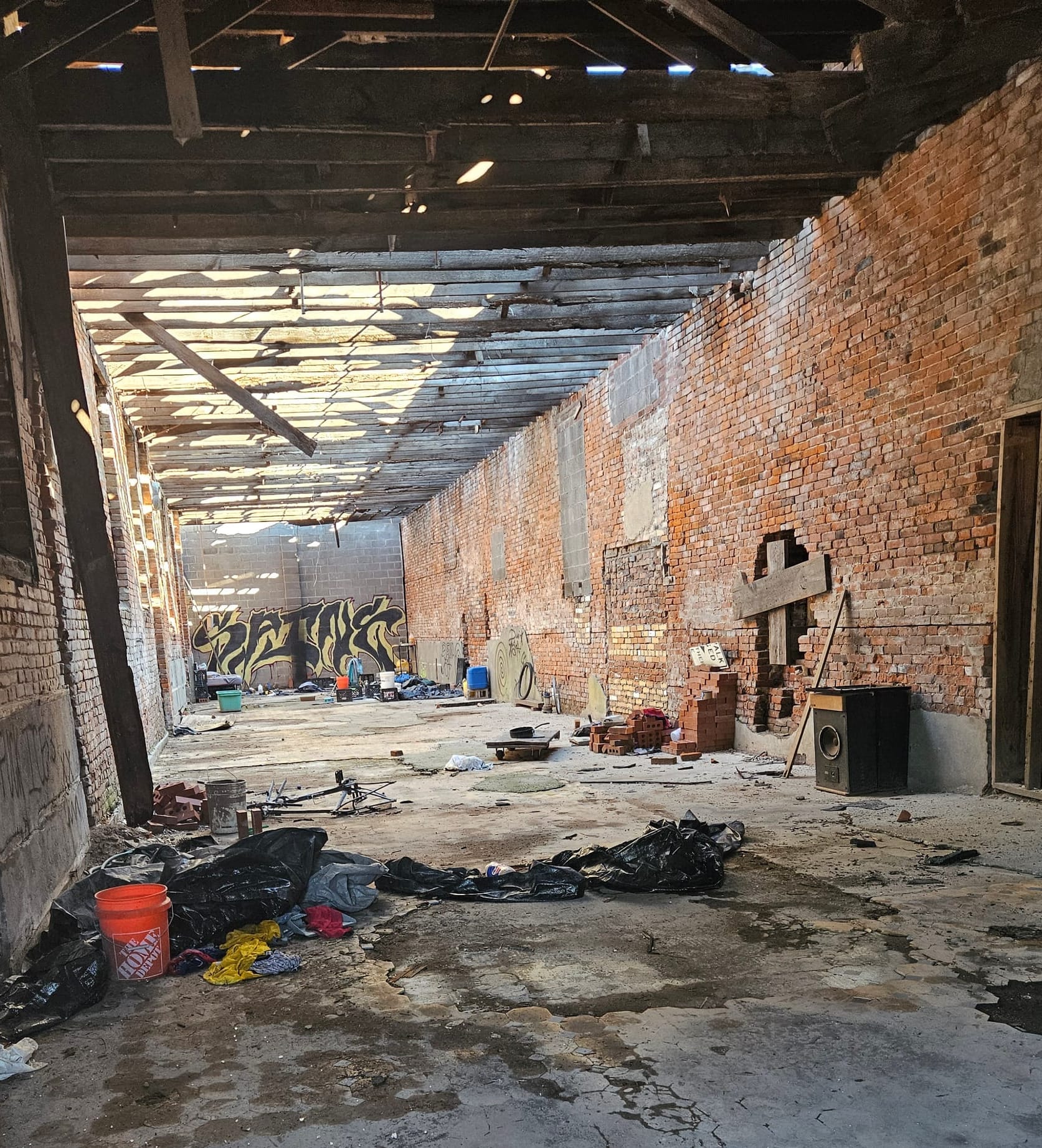
The building next to me is afforded no such minimum of grace, as it rests in a status neither dying nor dead. It has been damaged, vandalized, transacted, and assessed throughout its emptiness. While a building cannot decide its own purpose, its ability to facilitate life and activity is generally its most defining feature. To have played host to a raucous saloon, a decadent club, and a center of commerce in a turbulent area is a busy pedigree; to stand as a survivor in the aftermath of trauma is to have one’s identity erased by history. There is no recovery ward for a gutted place.
The building itself was first called Flanagan’s, named by Irish immigrant James Flanagan, who built it in 1893. It was the pioneer saloon on the street, serving as such until the prohibition years of 1920 to 1933, during which period it was a drugstore and lunchroom. After prohibition, it was merged into the adjacent building as the Mo-Kan Gardens, a nightclub owned by the political bosses of the era. Once the Pendergast political empire declined, the building entered its final stage of life as the State Line Liquor Store. I was unable to determine exactly how long it operated as such, but county records show that as far back as 2005 it was abandoned.
As I write this, it is March of 2026. The building has stood empty for at least 20 years of its 133 year history. From what I can glean from tax records, it has changed hands a number of times, between various holding companies and some optimistic LLC names that imply plans for renovation, renewal, and conversion. In my work, the term ‘chain of custody’ refers to documented transfer of responsibility for a particular set of remains, as when the family turns the body over to a funeral home, who may in turn entrust it to a 3rd party embalmer or cremation service. The chain of custody for my neighboring building is not entirely legible to me, but there does at least appear to be one.
If we walk through the wilderness and encounter a fallen deer, we do not assume responsibility for its disposition. But we are immediately confronted with a reminder of the inevitable, and the boundless affordances of being alive. So, too, with the building next door, do I find a body ‘in the wild’, and try to give it its minimum decorum, welcoming it as a citizen of the living city and the necropolis of tomorrow. We are not part of the chain of custody, but our role as witnesses is a way to be part of its passage through the liminal space it now occupies.
Sources Cited:
      Wolff, Chris and Clio Admin. "The Wettest Block on Earth."
      Clio: Your Guide to History. March 1, 2026.
      Accessed March 2, 2026. https://theclio.com/entry/182828
      KC Yesterday. "The Wettest Block in The World"
      Accessed March 2, 2026. https://kcyesterday.com/articles/wettest-block
       Kansas City Public Library. Sanborn Map, Kansas City, Vol. 1, 1895-1907,
       Page p015.
       Accessed March 9, 2026. https://kchistory.org/image/sanborn-map-kansas-city-vol-1-1895-1907-page-p015?search=9th%20state%20line