Accession 002: The Curator
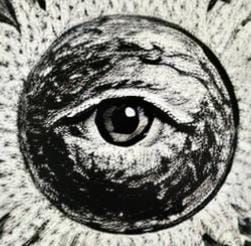
I am the Curator.
If that is sufficient, you need not continue.

A curator is in the museum but not of it. I write this not so much to tell you the biographical details, but to relay what is important to my role and why I embarked upon this project.
The name Necropolitan implies citizenship among the dead. It derives from ‘necropolis’ (νεκρόπολις, Greek for “city of the dead”) just as ‘cosmopolitan’ means ‘citizen of the world’. An ancient Greek polis (Πόλις) was a city-state, and a necropolis was the cemetery outside the walls of the city. To be a necropolitan is to retain one’s kinship and relationship to the things which have been circumscribed from daily life. It is a fascination with the continuity between the living and the dead rather than the abrupt disjunction the state implies.
I have long been drawn to edges, transitions, ambiguities, and the psychology of non-human timescales. Identity is a struggle for persistence in the face of the fluid. The cells of our body replace themselves completely in a matter of days, weeks, or months depending on the tissue, while “we” persist throughout the flux. The person you were as a child was you and became you, but is not someone you identify with today. I do not believe there is a fixed ‘whatness’ that defines and persists for any given object or individual, but I do believe that the patterns adopted by various forms of being are worth cataloging and perusing.
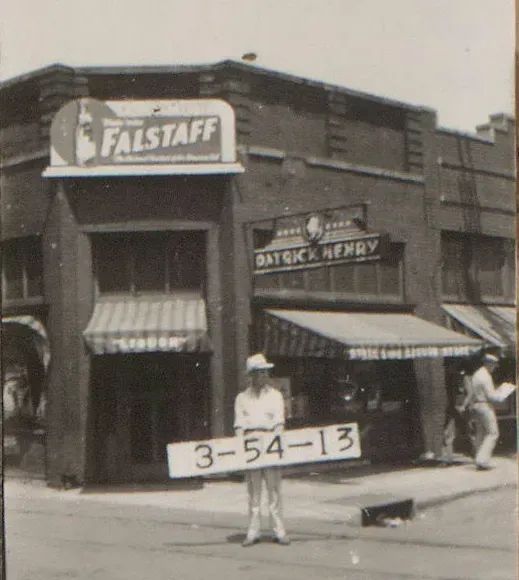
In my daily life, I own a deathcare business. My office is in a historical district which was an economic powerhouse at the turn of the 20th century, and today is remembered best for a devastating flood in 1951 which effectively drowned its prospects for long term economic development. I operate a practice which cares for the departed out of a deeply damaged part of the city. This leaves me passing by dilapidated buildings on my daily commute, handling the remains of the deceased, and returning home among the evening bustle of a cityscape defined by its rising from the ashes.

I mentioned three categories in my launch post that interest me most: the biological, the inanimate, and the digital. Biology is the most familiar of mortal constraints, but I find meaning in reading metaphors of life and death into physical objects to be a helpful way of understanding their trajectory through time and space just as they help us with our own journey. In the modern world, the digital exists in an extreme version of the life and death binary. Data exists only insofar as electricity is running through the channels of memory, and tracelessly vanishes once the current stops. A strange in-between state exists in storage (hard drives) where ‘life’ is frozen as a pattern of magnetization, like a fossil that can be reanimated.
The kinship with the biological is natural to us. We are biological beings, we experience the arc of life and see its end many times before our own dissolution. The life of the inanimate is our projection of this cycle onto the things that serve us. When I drive past an abandoned building, its face bearing decades-old paint of a business long defunct, I think about what it means for a building to die. A body in the woods is quickly reduced to bones, and a building is like the persistent bone of the civilization it supports. Cities operate on a timescale above the mortal, and the disconnection between the lifetime of a home or a business is jarring when we confront it in relation to our own lifespan. Institutions that felt unshakable and permanent close, leaving an empty behemoth. New businesses move into their husks, changing the environment to suit their needs and the interests of the surrounding community. The circle of life for the urban is perhaps more of an oval, but is not totally alien to the biological equivalent.

What I proposed in the founding document was an attitude I called ‘radical compassion’. This is the act of drawing an unrestrained equivalence with something else, whether a lifeform or an object, and looking for the parallels of mortality. I am not proposing that buildings have a literal spirit or that computers are alive because they ‘think’, I am only inviting the reader to reflect on that variety of states of being spread across our experience, and see what we can learn about how we live, how we die, and the spectrum that lies between and beyond. Radical compassion is an experiment in liminal space.
To draw these threads together, I am one person among billions and billions of ‘living’ things, all at different states of their journey, trying to imagine alternate modes of being as proposed by the countless alternatives I cohabitate with. To build an archive of departures and dispositions is to lend a final dignity to things which are not always accorded this rite. It may serve nothing other than my own curiosity, but I suspect that my methodology will have its adherents.
I am the Curator.
Welcome to The Necropolitan.